Glide helps you get your tasks out of your head, plan a day you can really get through, and build habits that help you reach your goals.
iPhone version coming later
Tasks
Get it out of your head
Trying to remember everything is hard work. Tasks you keep in your head pop up at the wrong time, and slip away when you need them.
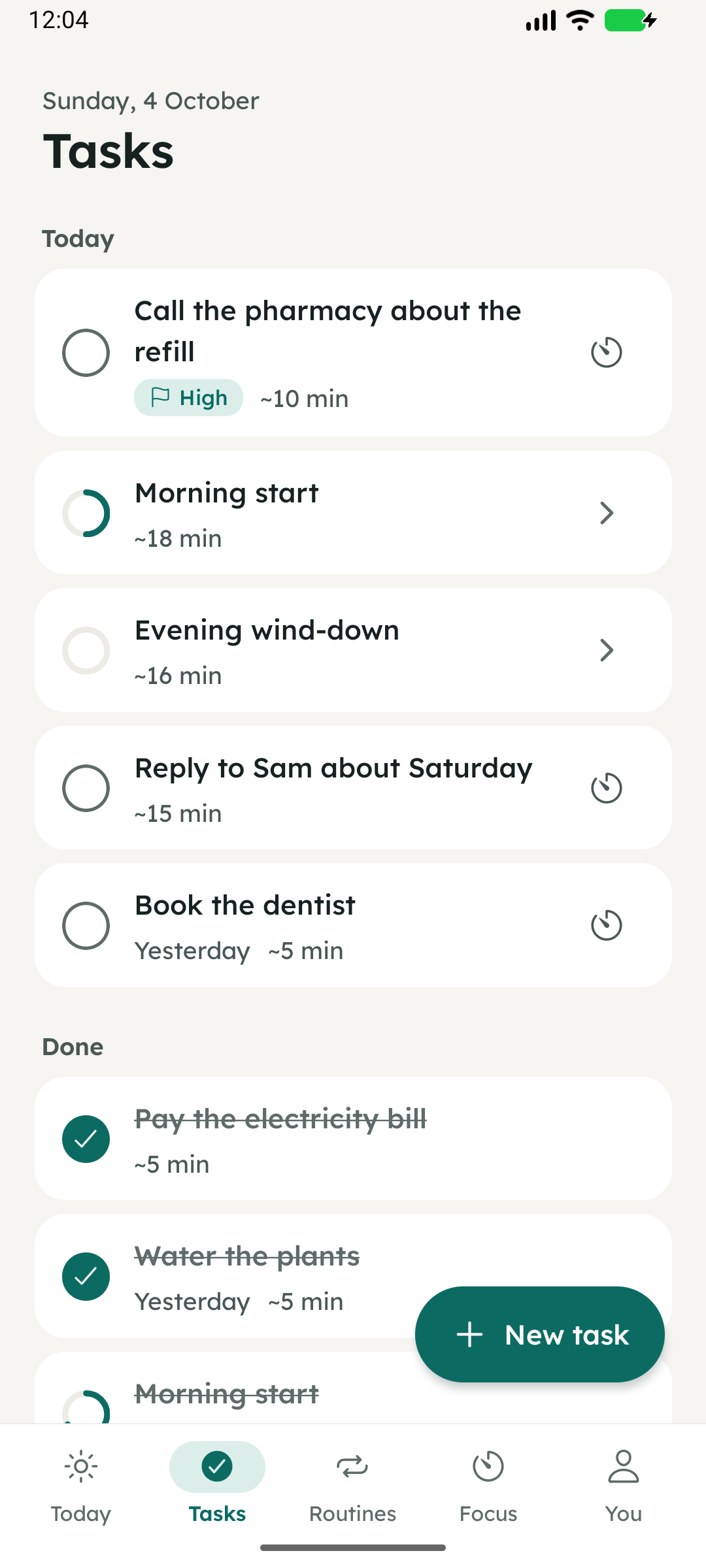
In Glide, you write every task down and pick a day for it. Once you’ve decided when you’ll do a task, your mind stops reminding you about it.1 You don’t have to keep it in your head anymore.
Keeping work, home, errands and appointments together also shows you how much you really have to do, so you can tell when it’s too much.
Type a task in one line, like “Call the dentist tomorrow”, and Glide puts it on the right day. More about tasks
Today
A day you can actually do
Most of us plan our day as if nothing will go wrong. Then messages, errands and surprises show up, and by the afternoon the plan has fallen apart.
The Today screen shows the tasks due today, most important first, along with your routines and goals. If there’s too much to do, you’ll see it in the morning. Then you choose which tasks to move to another day. Today’s list stays short and shows what matters most, so it’s easier to focus and less stressful to look at.
Glide waits for you to open it, whenever suits you.
Open Glide after breakfast, between meetings, or at the end of the day to plan tomorrow. More about today
Routines
Habits, one small step at a time
New habits are hard to build. It’s easy to try too much at once, miss a few days, and give up.
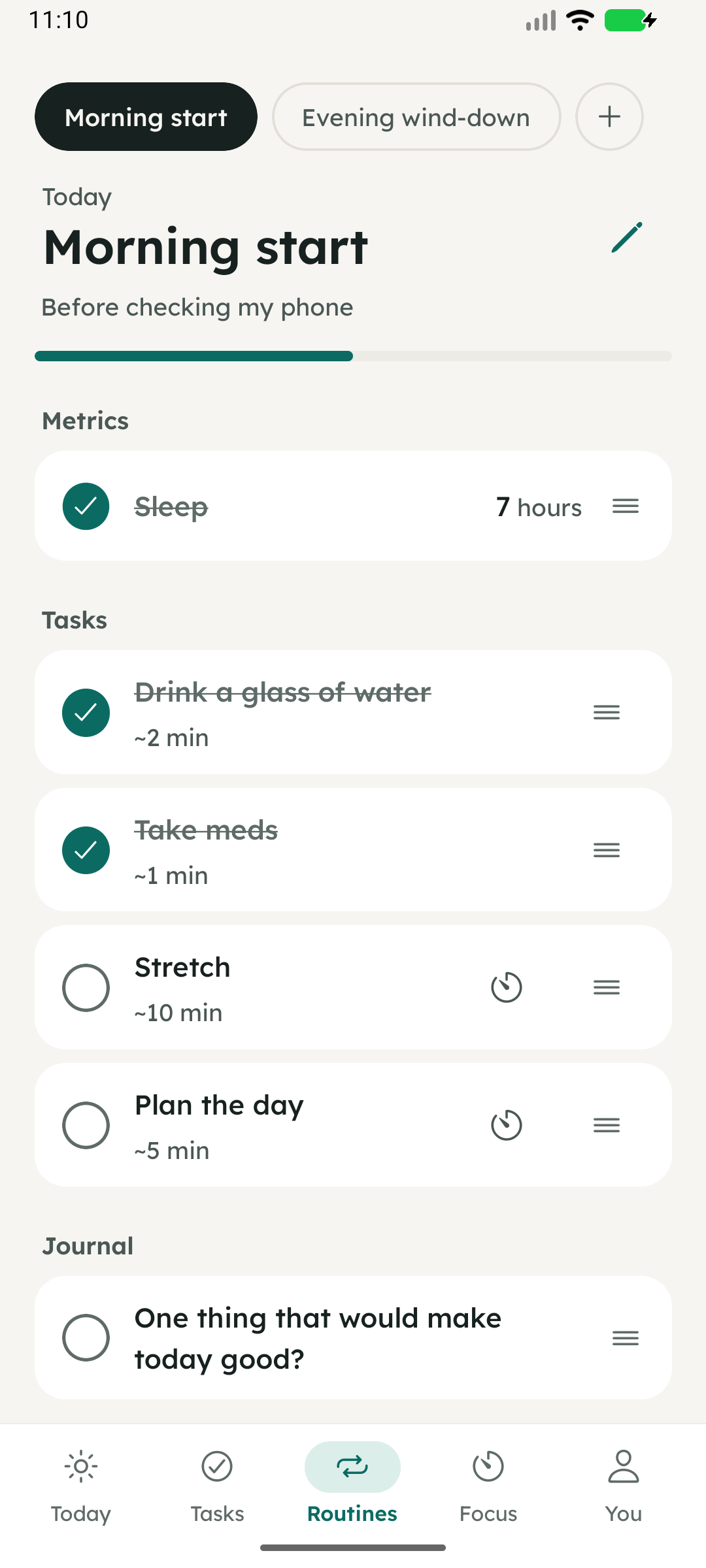
A routine in Glide is a short list of steps you do at the same time each day, like right after your morning coffee. Your routine is waiting for you every day, so there’s nothing to plan or remember.
Small routines are easier to keep. Doing a routine right after something you already do, like making coffee, reminds you to do it, and makes you more likely to stick with it.2 Every day starts fresh, so missing a day doesn’t wipe out your progress.
Add steps to check off, a number to track, like hours slept, or a question to answer, like “What went well today?”. More about routines
Goals
Goals built on what really happens
Many of us set goals based on hope. When real life doesn’t match, we give up. Then we set a new goal that’s just as hard, and feel let down again.3
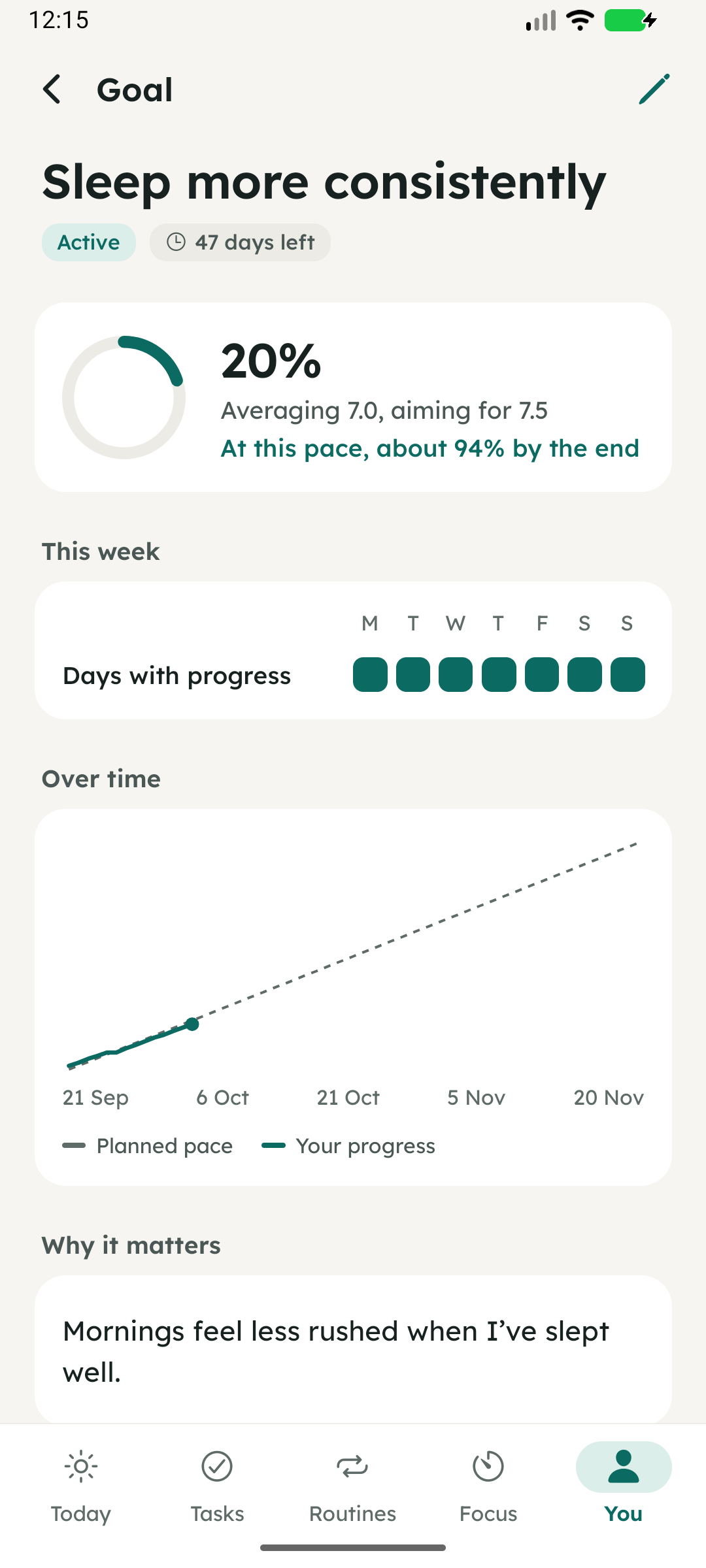
In Glide, goals use numbers your routines already track, like how long you sleep or how often you walk. Glide shows whether you’re on track to reach your goal. With real numbers, you can set a goal you can actually reach, and change it when your life changes.
Pick a number to track, set a target and an end date, and follow the pace line. More about goals
Focus
Start, and stay with it
Starting a task is often the hardest part. Once you start, it’s easy to get distracted or lose track of time.
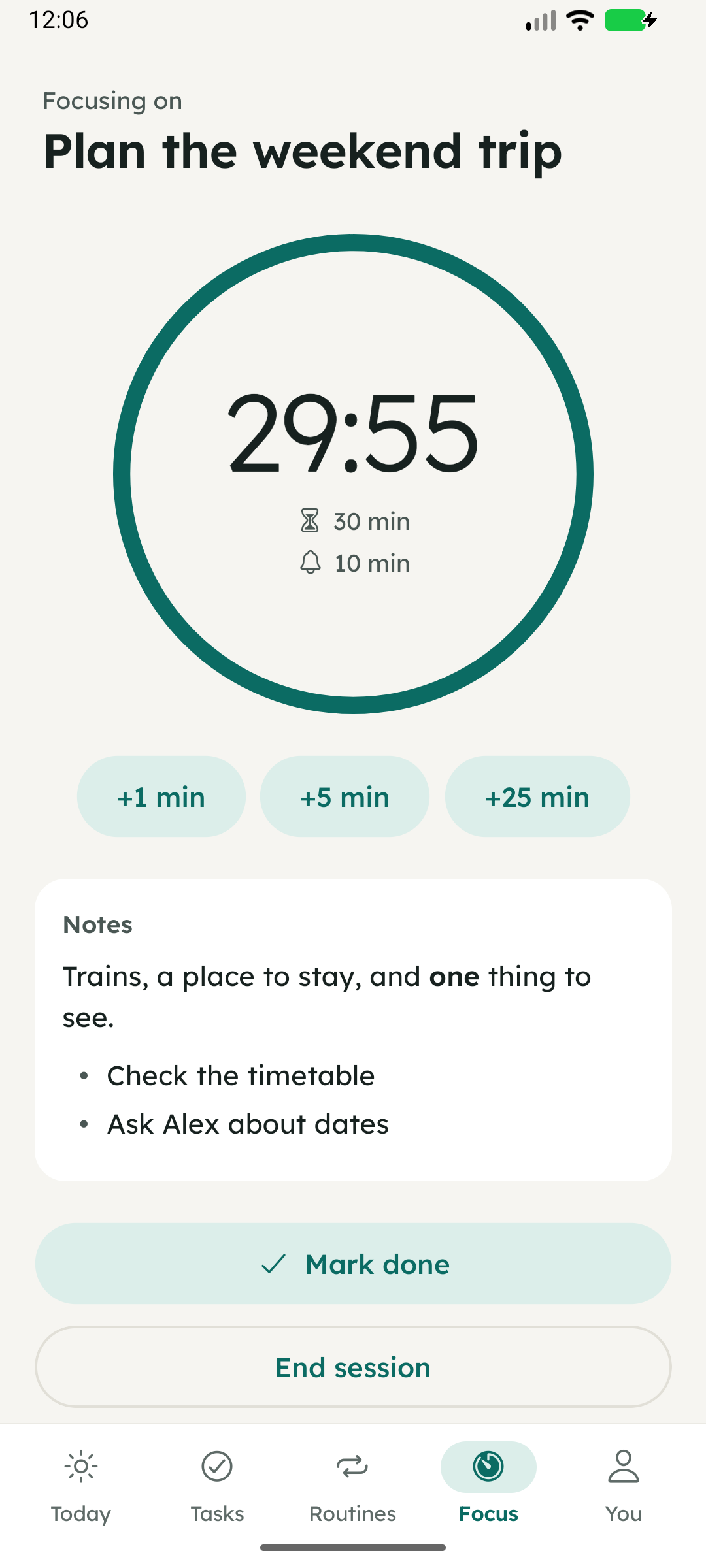
Focus is a timer for one task. You only promise to work until the timer ends, not to finish the whole task, so it’s easier to start. While the timer runs, other apps can’t interrupt you, and soft chimes tell you how much time has passed, so you don’t have to watch the clock.
Working for a set time and then taking a short break helps you focus better and feel less tired.4 This is called the Pomodoro technique. You can also use Focus to set aside time for a task that tends to take over your day. Or use it as a timer for meditation or exercise. It works even with the screen off.
Tap the timer on any task, or start a timer on its own. More about focus
Journal
Notice what’s working
Numbers show what happened, but not why. Writing about your day helps you understand why. But a blank page is hard to start.
Glide puts a short question or two in your routines, like “What went well today?”. Answering one question is easy, and your journal fills up as you go. After a few weeks, you can read your answers next to your numbers and see what helps. For example, you might notice how a short night’s sleep affects the rest of your day.
Every part of Glide was designed with care. The design comes from real experience with these struggles, and from research about attention, planning and habits. The Why page explains each choice and the research behind it.
Your tasks, routines and journal are private. Glide keeps them on your phone. You don’t need an account, and there are no ads. If you sync between devices, Glide locks your data with a key that only your devices have, before it leaves your phone. The privacy policy has the details.
Sources
Masicampo, E. J., & Baumeister, R. F. (2011). Consider it done! Plan making can eliminate the cognitive effects of unfulfilled goals. Journal of Personality and Social Psychology. doi:10.1037/a0024192
Gollwitzer, P. M. (1999). Implementation intentions: Strong effects of simple plans. American Psychologist. doi:10.1037/0003-066X.54.7.493
Polivy, J., & Herman, C. P. (2002). If at first you don’t succeed: False hopes of self-change. American Psychologist. doi:10.1037/0003-066X.57.9.677
Biwer, F., et al. (2023). Understanding effort regulation: Comparing ‘Pomodoro’ breaks and self-regulated breaks. British Journal of Educational Psychology. doi:10.1111/bjep.12593