Goals
A goal is a meaningful outcome you're working toward, measured against a specific target. Goals give your routines and tasks direction — they're the why behind your daily actions.
Goals are SMART
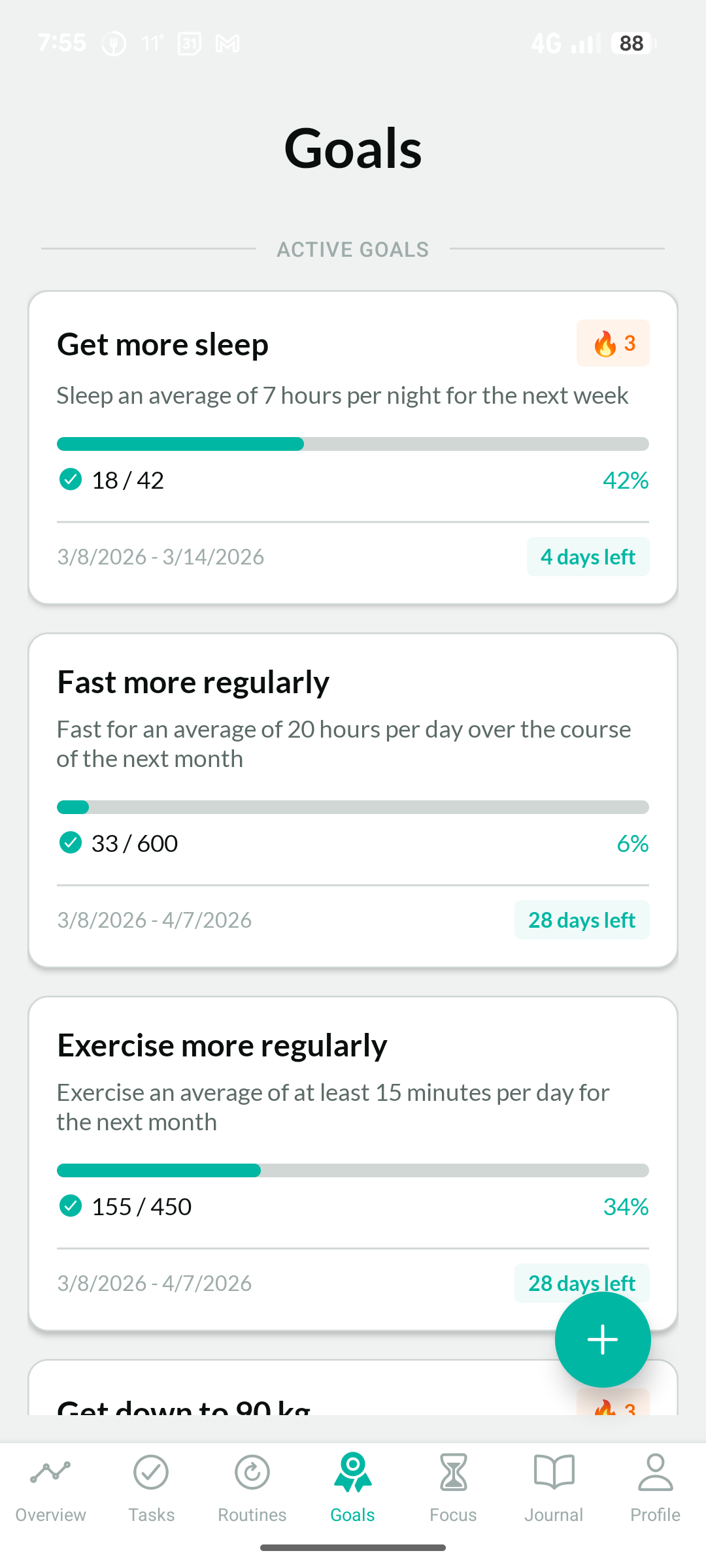
Glide was engineered to encourage you to build SMART goals:
- Specific — a clear title and description of what you're trying to achieve and why
- Measurable — a single target metric: a number you're working toward (e.g., averaging 7+ hours of sleep per night)
- Achievable — a realistic target range you can hit consistently
- Relevant — linked to a routine or task you're already doing
- Time-bound — a target date that drives the burndown chart and gives your progress meaning
The target metric
The target metric is the heart of a goal. It's the specific, measurable number you're working toward — not just a record of whether you showed up, but whether your effort is moving you toward the outcome you actually care about.
Each goal has one target metric. That metric comes from a routine you've linked to the goal. Some examples:
- Averaging 7+ hours of sleep per night
- Reaching a target body weight by a given date
- Going to the gym at least 4 times per week
- Running 20km per week
- Building up to a 20-minute daily meditation session
How progress works
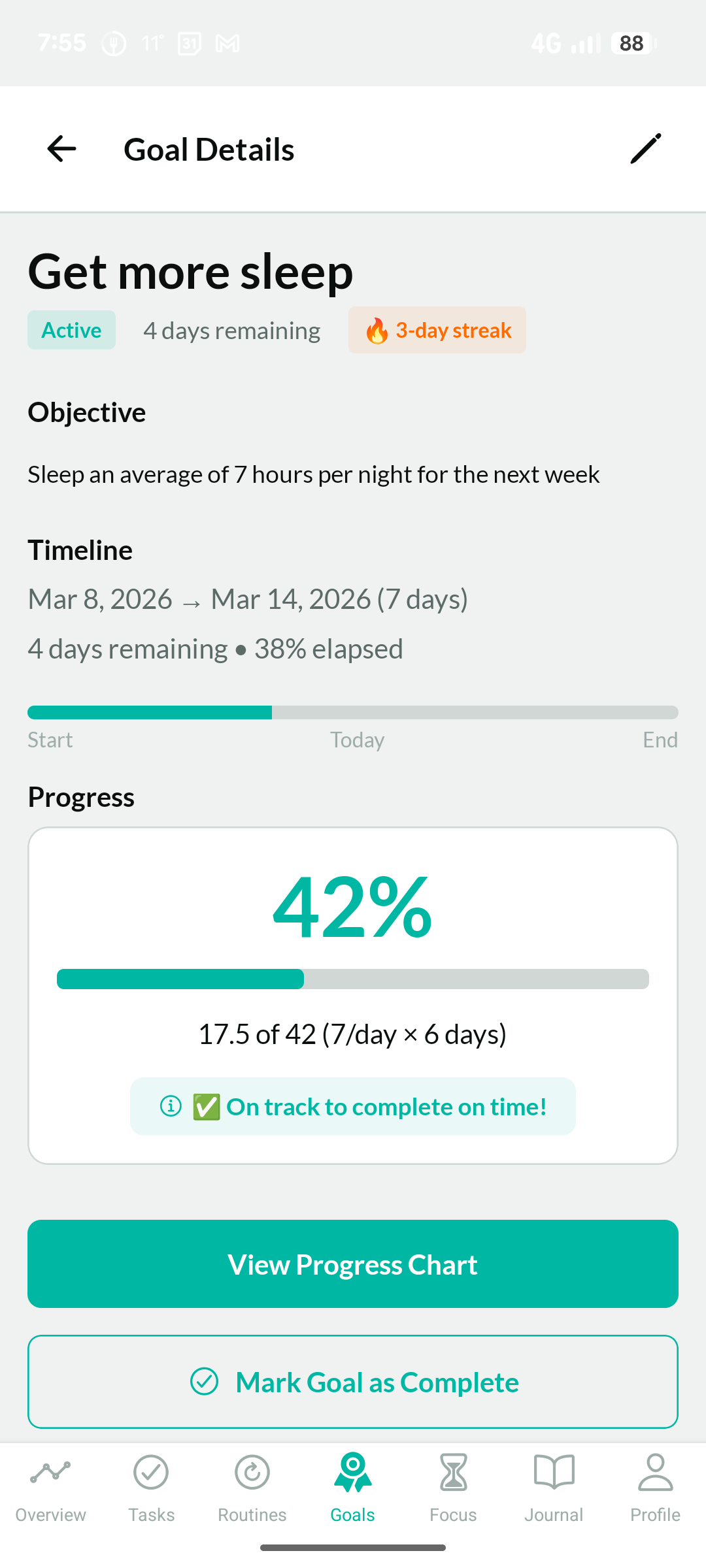
Progress is calculated from the routine you've linked to the goal. As you complete tasks or fill in a metric or journal entry, the progress bar moves. Your target metric ties that progress to a real number.
Streaks track how many consecutive days you've had activity on the goal. Consistency matters more than intensity. A streak of daily small iterations is more valuable than occasional bursts.
The burndown chart
The burndown chart shows two lines: a linear trend line and where you actually are.
If you're above or on the line, you're on track. If you're below the line, that's ok. Not all progress is linear. The chart shows you the gap — without judgment. Knowing you're behind means you can adjust if you need to: take an extra session, revise the target, extend the date. Any of those is a valid response.
Falling behind isn't a grade. It's information. Knowing where you are is what lets you respond.
Quick actions
Swipe left on a goal to mark it as complete. Swipe right to defer or abandon it.
These gestures work on active goals only. Tap a goal to open the detail view for editing, checking progress, or viewing the burndown chart.
Keeping goals useful
A goal without a viable routine and target metric is just a wish. Before creating a goal, make sure you have a routine you can manage, and that it tracks the metric you care about. See Getting the most out of Goals for how to build goals that actually work.
One or two active goals is enough for most people. More than that dilutes your attention and makes it hard to build meaningful streaks on any of them.
When a goal no longer reflects something you actually want, archive it. There's no shame in updating your goals as your life changes. An abandoned goal you feel guilty about does more harm than good.